One translator for every WordPress builder
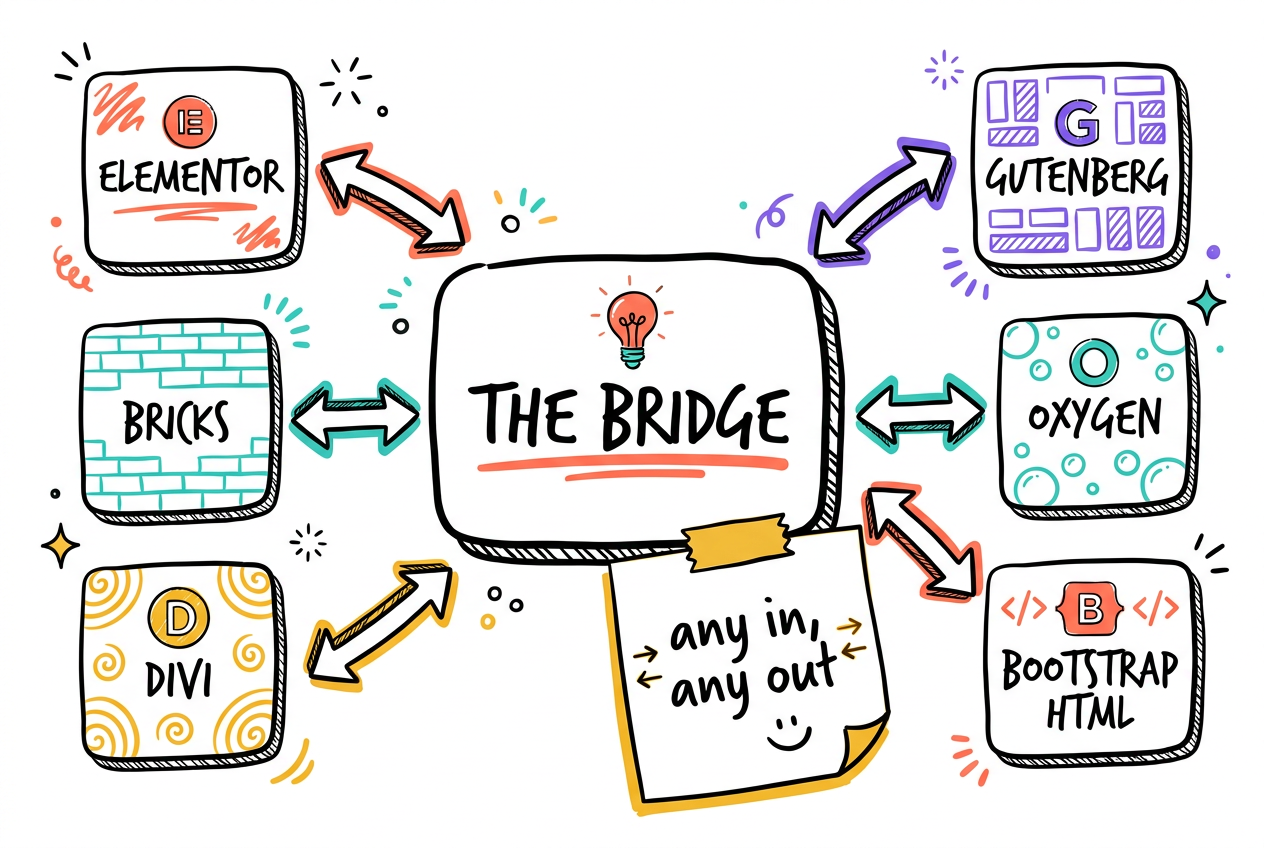
Development-Translation-Bridge is a universal content converter for WordPress page builders. Point it at a page built in Elementor and get the same page in Bricks, Gutenberg, DIVI, or plain Bootstrap HTML, with the layout, widgets, typography, and spacing intact. It supports 14 frameworks, which means 182 possible conversion pairs, and it ships as three things at once: a WordPress plugin, a command-line tool, and a Python library.
- 14 page-builder frameworks, 182 translation pairs.
- Any supported builder in, any supported builder out.
- Ships as a WP plugin, a CLI, and a Python library.
Page-builder migrations are destructive
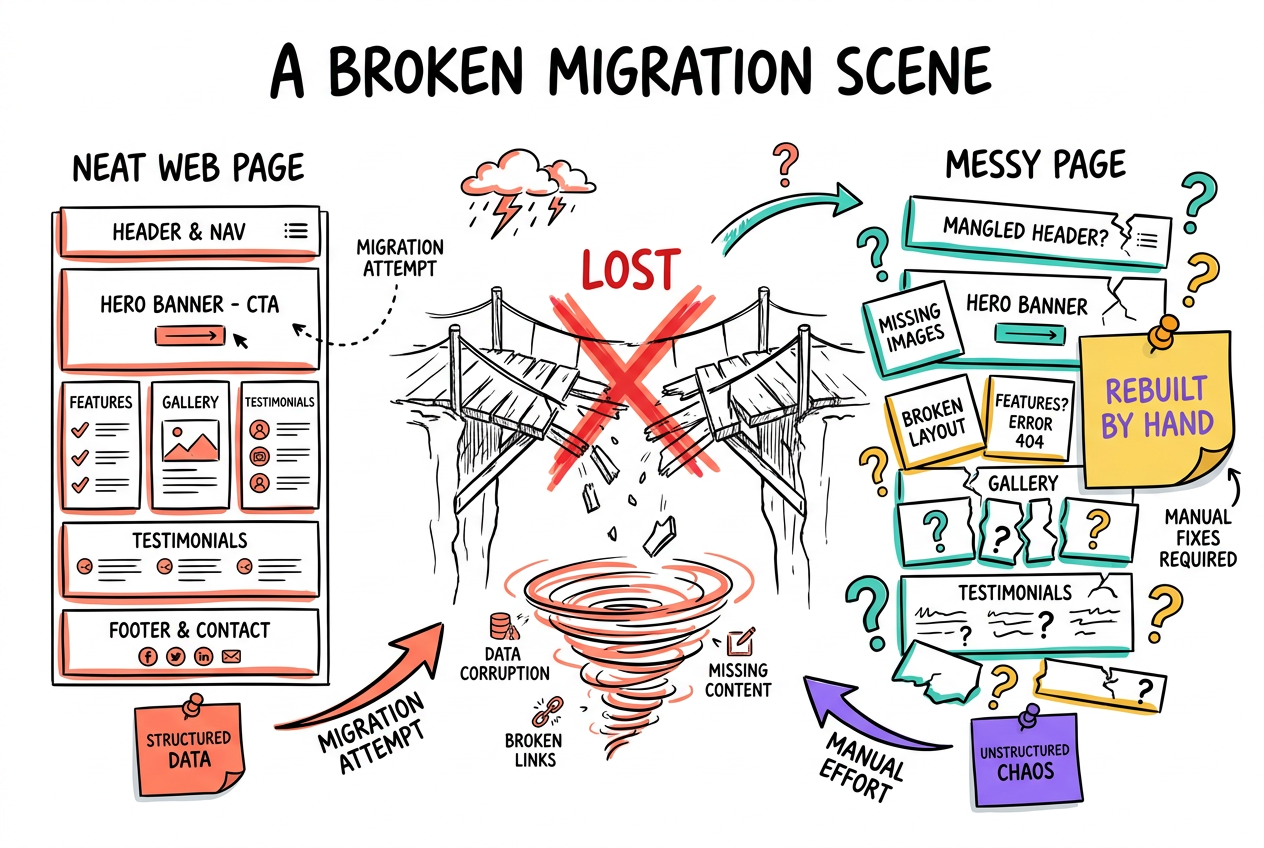
Move a WordPress site from Elementor to Bricks, or DIVI to Gutenberg, and the normal outcome is loss. Content vanishes, layouts collapse, and someone rebuilds the page by hand. The Bridge automates that conversion instead, carrying structure and styling across so the migration is a button press, not a week of manual recreation.
- Switching builders usually means rebuilding pages from scratch.
- Widgets, spacing, and typography get lost in the move.
- The Bridge carries the design across automatically.
Parser → Universal model → Converter
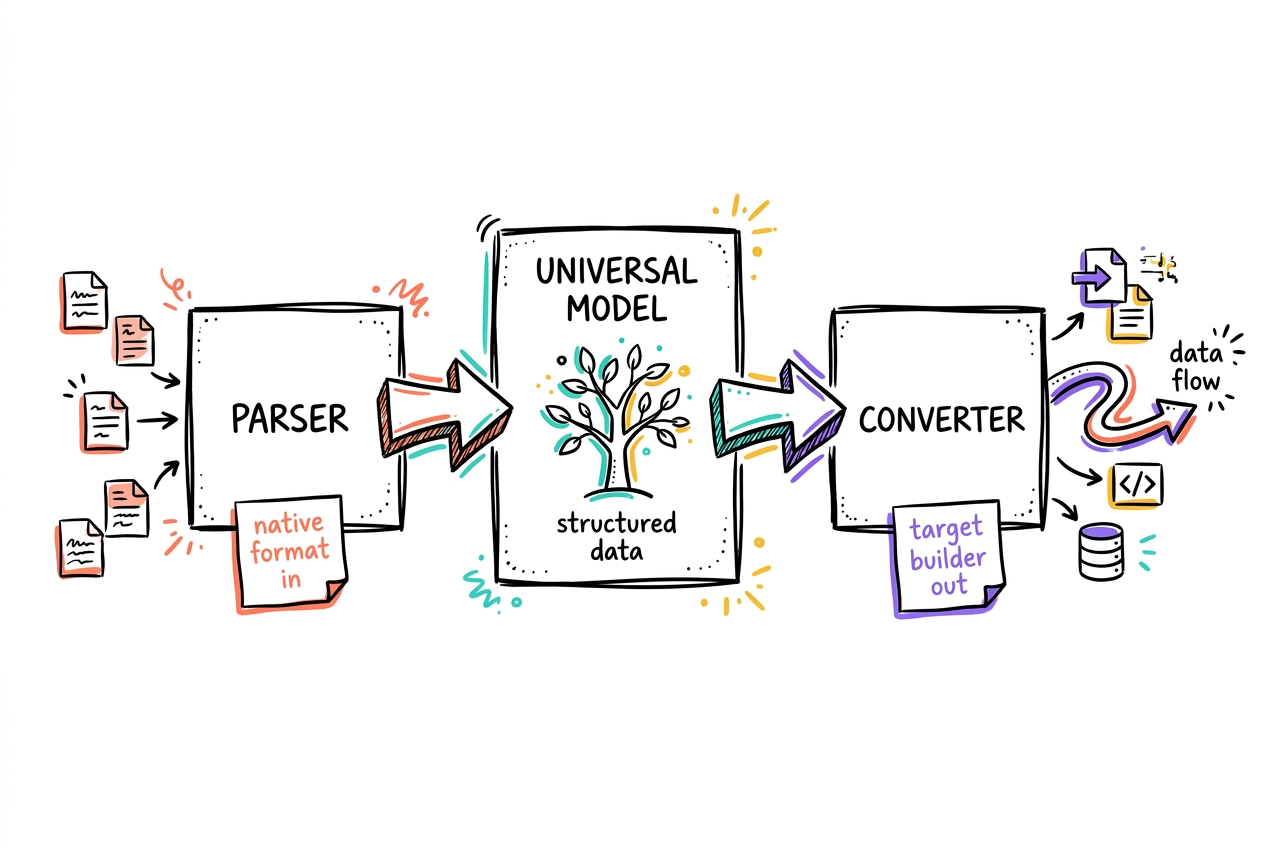
Every conversion runs through a three-stage pipeline. A framework-specific parser reads the native format and builds a typed component tree. That tree becomes a language-agnostic universal model that captures structure, content, styling, and responsive behavior. Then a framework-specific converter emits the target format from that model. Because every input lands on the same universal tree, any source can target any output.
- Parser: reads the native format into a typed component tree.
- Universal model: one neutral representation in the middle.
- Converter: emits the target builder from the universal tree.
Two transformation paths
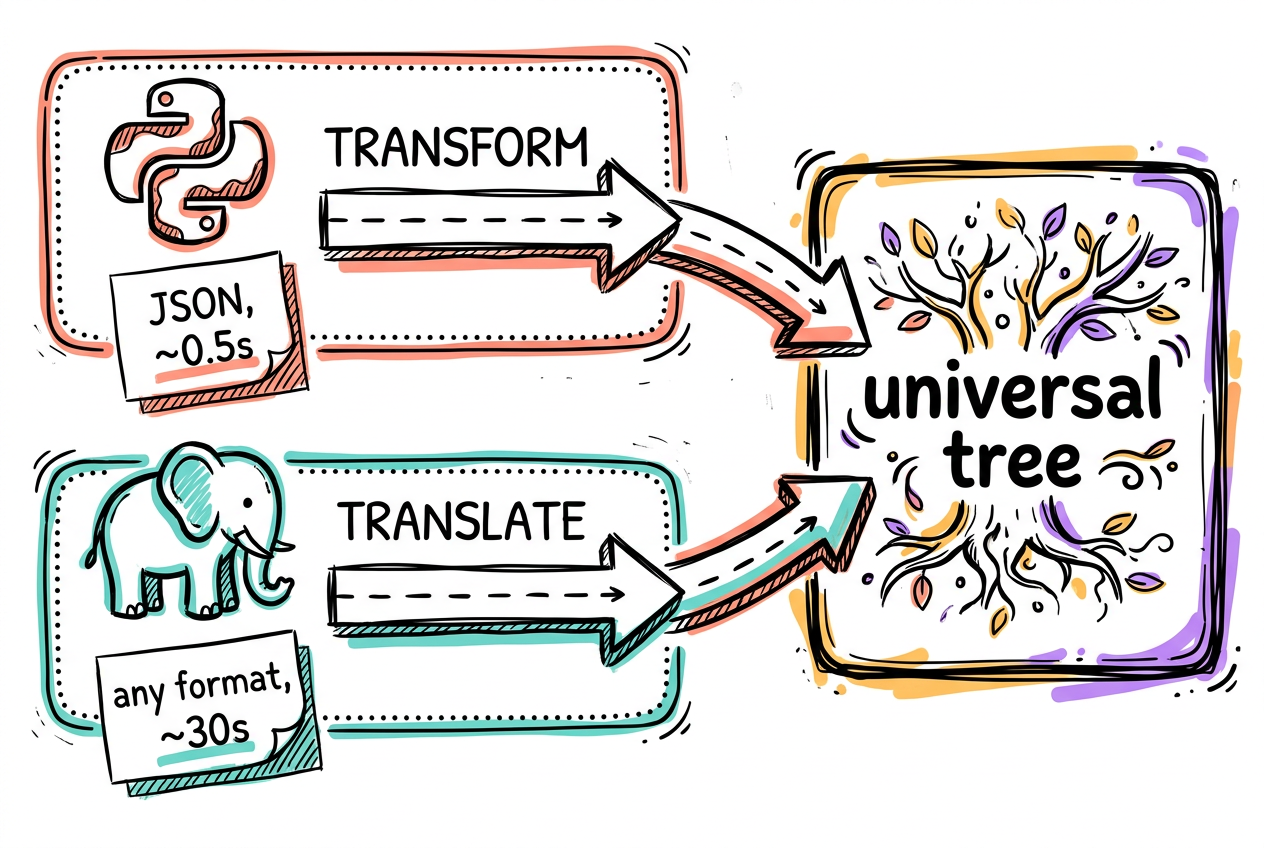
There are two engines that meet at the same universal tree. Transform (Python) does direct JSON-to-JSON conversion for modern builders, fast and metadata-complete, around half a second a page. Translate (PHP) parses any format including legacy shortcodes into the universal representation and emits the target, broader coverage at roughly thirty seconds a page. Modern builder? Take the fast lane. Legacy shortcodes? Take the full-coverage lane.
- Transform (Python v4): JSON to JSON, ~0.5s, 100% metadata.
- Translate (PHP v3): any format in, ~30s, handles shortcodes.
- Both converge on the same universal component tree.
./devtb transform elementor bootstrap input.json -o output.html./devtb analyze elementor mystery.json14 frameworks, 182 pairs
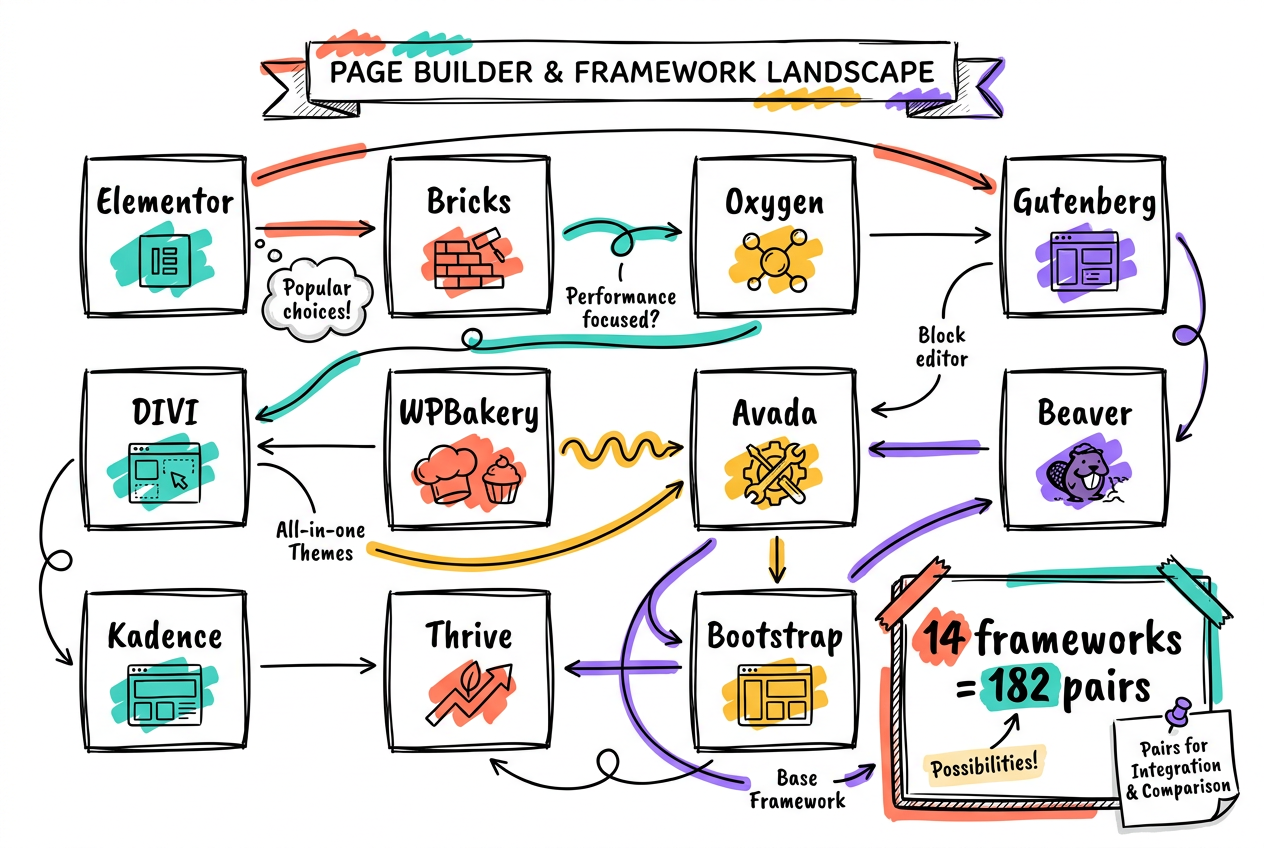
The Bridge speaks JSON-based builders (Elementor 3.x and 4.x Atomic, Bricks, Oxygen legacy and 6.x, Gutenberg, DIVI 5), shortcode-based builders (DIVI 4, WPBakery, Avada, Fusion), and proprietary formats (Beaver Builder, Kadence, Thrive Architect). Everything can also export to Bootstrap 5.3 HTML, a clean, AI-friendly universal output. Add the count up and you get 182 directional conversion pairs out of the box.
- JSON: Elementor, Bricks, Oxygen, Gutenberg, DIVI 5.
- Shortcode: DIVI 4, WPBakery, Avada, Fusion.
- Proprietary: Beaver Builder, Kadence, Thrive Architect.
- Bootstrap 5.3 HTML: the AI-friendly universal output.
Fidelity over speed
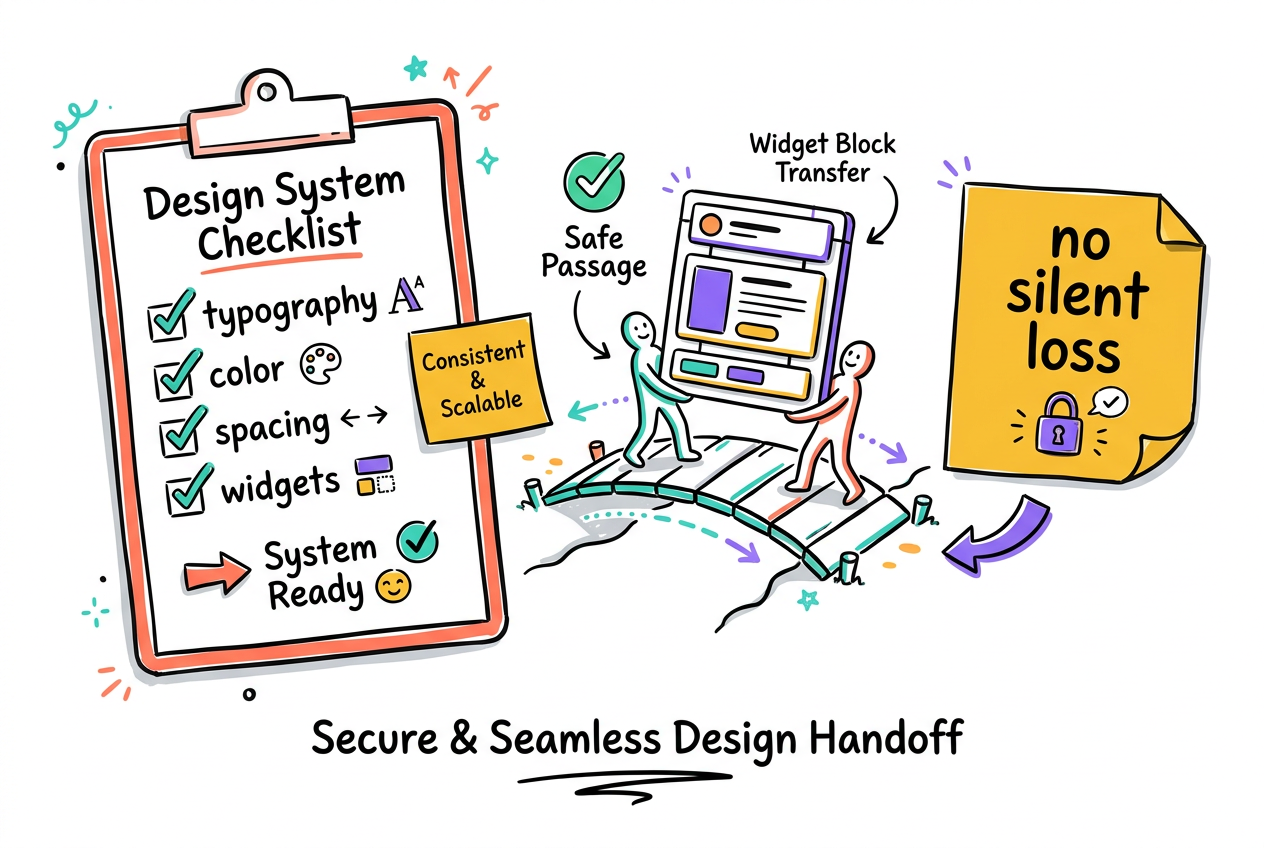
Roughly 70 widget types are mapped across all frameworks, with special handling for compounds like tabs, accordions, cards, and pricing tables. Typography, color, spacing, borders, CSS classes, anchors, and responsive breakpoints round-trip through a conversion wherever the target supports them. Anything the target cannot represent is preserved as an annotated HTML block, so widgets never silently collapse into empty paragraphs.
- ~70 widget types mapped, including compound widgets.
- Type, color, spacing, borders, classes all round-trip.
- Unsupported widgets survive as annotated HTML, not loss.
CLI, Python library, or REST API
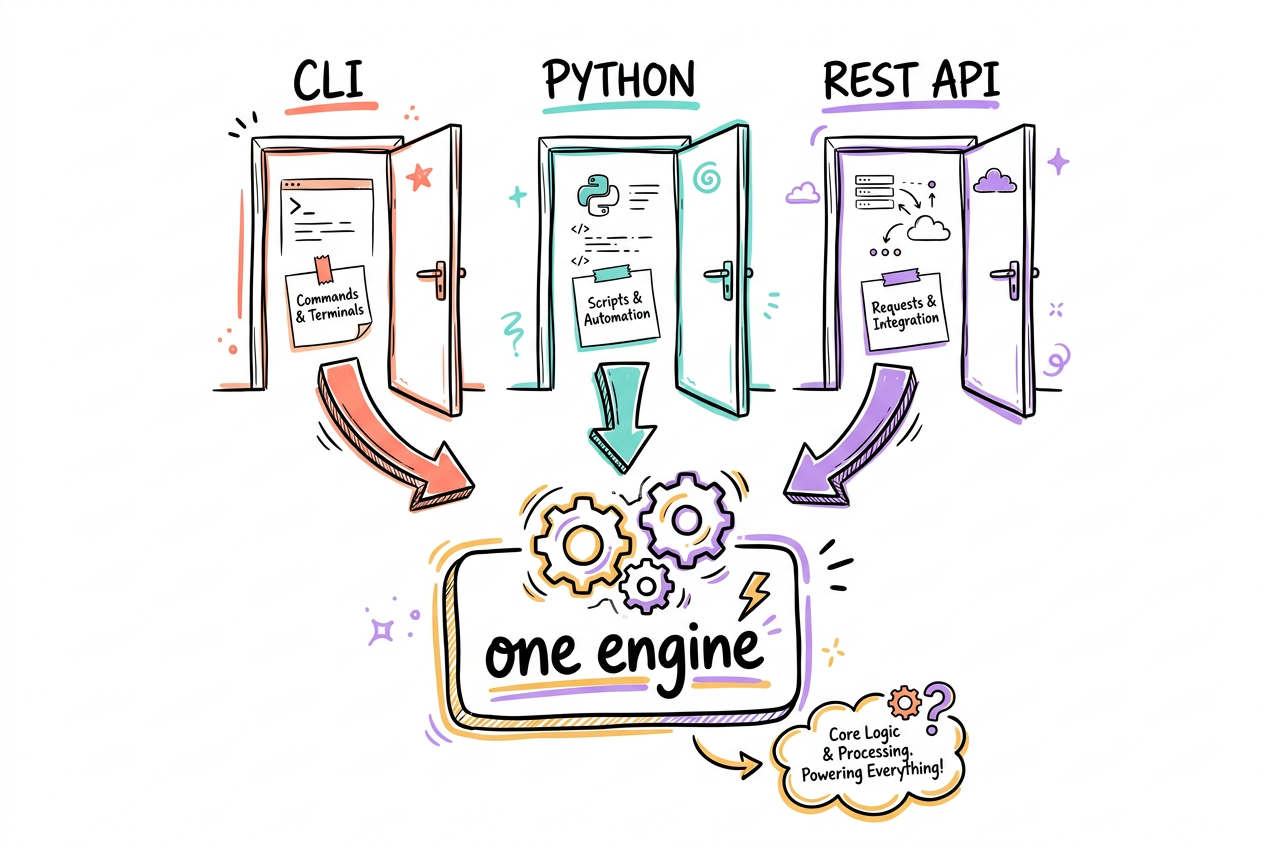
Pick the surface that fits your workflow. The CLI is best for automation and batch jobs, including converting an entire site export in one command. The Python library drops the converters straight into a pipeline. The WordPress plugin exposes a REST API with encrypted key auth, batch job queuing, translation history, and version control for saved conversions.
- CLI: scripts, automation, whole-site batch conversion.
- Python: import a converter into your own pipeline.
- REST API: web interfaces, queued batch jobs, history.
./devtb transform-site divi gutenberg ./export-kit/from translation_bridge.converters.bootstrap import BootstrapConverter
converter = BootstrapConverter()
output = converter.convert(parsed_data)POST /wp-json/devtb/v2/translate
{
"source": "elementor",
"target": "gutenberg",
"content": { ... }
}Migration at scale, and AI-ready content
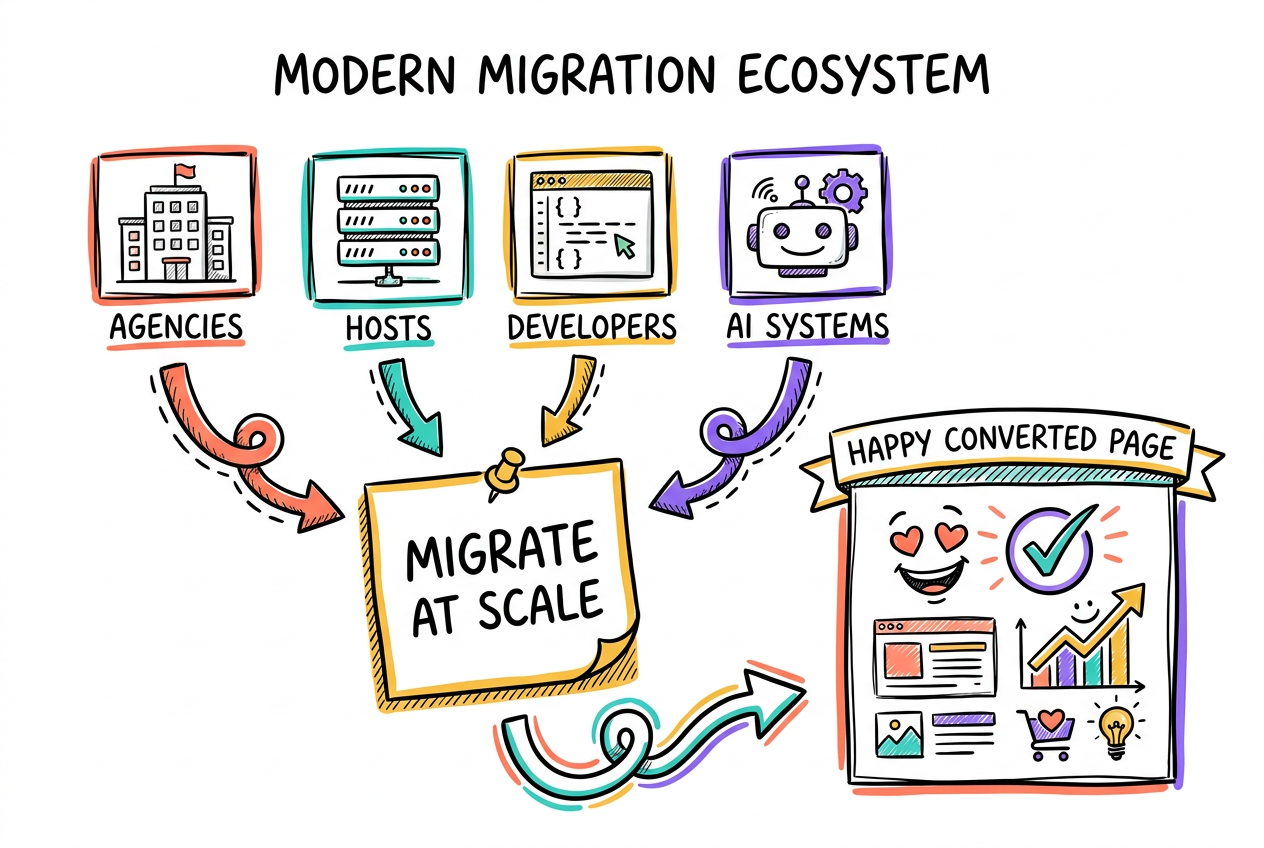
Agencies converting client sites between builders, hosts automating customer migrations, plugin developers building transformation pipelines, and in-house teams standardizing on one builder all get the same thing: lossless conversion without manual rebuilds. There is a fourth audience too: AI and agentic systems that want deterministic, structured access to page content via the Bootstrap HTML output. Adding a new framework is just a parser/converter pair plus a test fixture, and the 182-pair matrix expands itself.
- Agencies and hosts: migrate client sites at scale.
- Developers: drop conversion into a pipeline.
- AI systems: read clean, deterministic page structure.